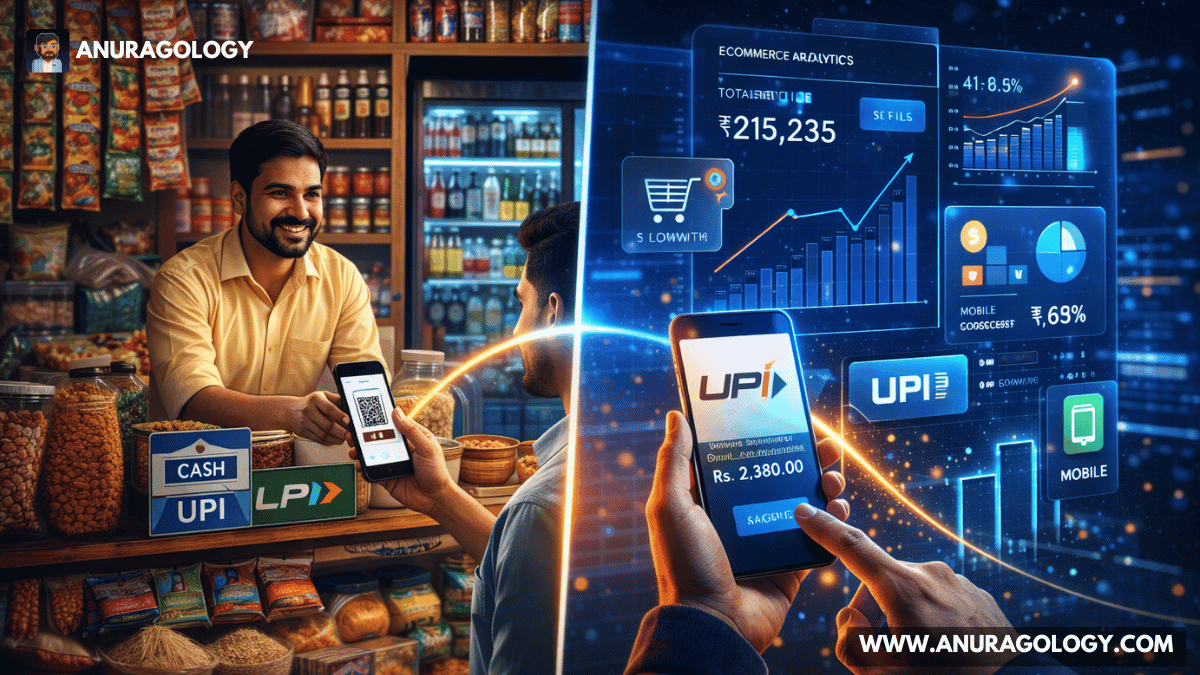
India is currently witnessing the greatest democratization of commerce in history.
For decades, the Indian Micro, Small, and Medium Enterprises (MSME) sector—comprising over 60 million businesses and contributing roughly 30% of the national GDP—operated mostly in the informal, offline economy. But in 2026, the narrative has completely flipped. Driven by massive digital public infrastructure, changing consumer habits in Tier-2 and Tier-3 cities, and aggressive digital marketing, Indian small businesses are no longer just surviving; they are outmaneuvering corporate giants.
If you are an aspiring entrepreneur or a digital marketer looking to build a business in India today, ignoring the MSME playbook is a fatal mistake. Here are the five critical lessons you must learn from the explosive growth of Indian small businesses.
Lesson 1: Build for the Open Network (The ONDC Disruption)
If you wanted to sell online five years ago, you had to surrender to the algorithms and heavy commission structures of massive marketplaces like Amazon or Flipkart. Those platforms often charged 15% to 30% in commissions, eating into the razor-thin margins of small sellers.
Enter ONDC (Open Network for Digital Commerce). By 2026, this government-backed initiative has completely unbundled e-commerce. It allows a local shoe seller in Agra to be discovered by a buyer in Mumbai across multiple buyer apps, without being locked into a single platform's ecosystem. With over 350 million transactions processed and commissions reduced to an average of 3-5%, ONDC has leveled the playing field.
- The Lesson for You: Stop building your business solely on "rented land." Whether you are launching an e-commerce store or a digital agency, diversify your distribution channels. The future of commerce is interoperable, and businesses that rely on a single marketplace monopoly are highly vulnerable.
Lesson 2: The Direct-to-Consumer (D2C) Explosion in Tier-2/3 Cities
The traditional assumption was that premium brands only sell in metro cities like Delhi, Bengaluru, and Mumbai. Data from 2025 and 2026 proves this is entirely false. Nearly 50% of India's registered small enterprises are now located in Tier-2 and Tier-3 cities, and these same cities are driving the majority of online order volume.
Indian MSMEs realized that relying on middlemen destroys brand loyalty. They pivoted aggressively to the Direct-to-Consumer (D2C) model. The Indian D2C market is rapidly approaching a $60 billion valuation. Brands are bypassing traditional retail chains, using targeted social media ads and influencer marketing to sell directly via their own websites and WhatsApp commerce.
- The Lesson for You: Own your customer data. When you sell through a middleman, you don't know who your customer is. When you sell D2C, you capture their phone number and email, allowing you to build powerful, automated retention marketing funnels.
Lesson 3: Lean Branding Through AI and Gamification
In the past, building a highly polished, trustworthy brand identity required a massive budget for design agencies and photoshoots. Today, smart Indian MSMEs are punching far above their weight class by utilizing tech-forward, lean branding strategies.
A local startup can now deploy AI image generation to maintain a highly consistent face or virtual ambassador across hundreds of social media posts, creating a unified brand aesthetic for pennies on the dollar. Furthermore, they are moving beyond simple point-based loyalty programs. Brands are actively gamifying their communities with digital assets—such as designing a customized 3D badge with a futuristic style titled "Influence Leader" to reward their most vocal advocates and repeat buyers.
- The Lesson for You: You do not need corporate capital to look like a corporate entity. Master the latest AI and digital design tools to build a premium, hyper-consistent visual identity that builds instant trust with your audience.
Lesson 4: The Expectation of Hyperlocal Speed (Quick Commerce)
The Indian consumer's patience has shrunk. Driven by platforms like Zepto, Blinkit, and Swiggy Instamart, the Quick Commerce sector in India is growing at an astonishing 70-80% CAGR.
While not every small business can deliver a product in 10 minutes, the underlying consumer psychology has shifted. Buyers now expect extreme transparency, instant communication, and rapid fulfillment. Successful Indian small businesses have adapted by regionalizing their inventory and integrating hyper-local delivery fleets into their checkout processes.
- The Lesson for You: Speed is a feature, not just a logistics metric. If you run a service-based business or an agency, your onboarding, communication, and delivery must be frictionless and rapid. The business that removes the most friction wins the client.
Lesson 5: Scaling the "Bharosa" (Trust) Factor
The bedrock of traditional Indian commerce is bharosa (trust). The local kirana store owner knew your family, knew your preferences, and offered credit based on relationships.
The most successful digital MSMEs in 2026 haven't abandoned this; they have digitized it. They use WhatsApp API to send personalized, conversational updates rather than cold, robotic emails. They actively feature founder stories and behind-the-scenes content on Instagram Reels to humanize their brand. They rely heavily on community reviews and local micro-influencers to validate their products.
- The Lesson for You: Digital marketing is just human psychology multiplied by technology. Do not hide behind a corporate logo. Be visible, be conversational, and focus relentlessly on building a community of advocates rather than just a list of buyers.
Final Thoughts
The Indian small business ecosystem is no longer playing catch-up with the West; in areas like digital payments (UPI) and open commerce networks (ONDC), it is actively writing the global playbook. For anyone looking to launch a venture or master digital marketing in 2026, the blueprint is clear: embrace open networks, own your audience, leverage lean AI tools, and never lose the human element of trust.
Ready to implement these strategies in your own venture? Dive into the advanced marketing frameworks inside the Anuragology platform and start building a scalable, resilient business today.